The Context of the Match: Why Finals and Opening Rounds Require Different Approaches

The Context of the Match: Why Finals and Opening Rounds Require Different Approaches
When a player steps onto court for a Grand Slam final, it is not just another match. It is the culmination of weeks of physical strain, mental fatigue, and rising expectations. At the same time, it is a completely different reality from the one faced in the opening round, where the focus is often on finding rhythm and avoiding unnecessary mistakes. In tennis – and in sport more broadly – context determines approach. Finals and early rounds demand very different mindsets, tactics, and physical preparation.
The Opening Round: Finding Rhythm and Confidence
At the start of a tournament, few players aim to play their very best tennis straight away. The priority is to settle in, adapt to the conditions, and build confidence. Courts feel new, the balls behave differently, and the body needs to adjust to the pace of competition.
That is why top players often play more conservatively in the early rounds. They test their opponent’s strengths, fine-tune their serve, and look for consistency in their groundstrokes. Taking too many risks too early can lead to unforced errors and a loss of rhythm. The goal is to build momentum – point by point, match by match.
Mentally, the first round is a test of focus. Many upsets have occurred because a higher-ranked player underestimated an opponent or failed to find intensity early enough. The best approach is to respect every opponent, but to conserve energy for the battles ahead.
The Final: When Everything Is on the Line
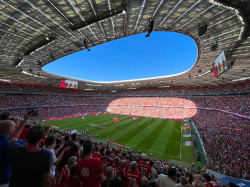
A final is a different world altogether. The crowd is louder, the pressure heavier, and every point feels decisive. By this stage, rhythm should already be established; what matters now is composure. The ability to stay calm when the stakes are highest often separates champions from challengers.
Tactically, finals tend to be tighter affairs. Players know each other’s patterns, have studied each other’s weaknesses, and look to exploit even the smallest opening. It is about taking initiative, but also about choosing the right moments. A single rash decision can shift the entire match.
Mentally, the final demands a delicate balance between intensity and control. Too much tension can lead to stiff movements and errors; too little can result in a lack of sharpness. The great champions – from Andy Murray in his prime to Novak Djokovic today – excel at finding that mental space where focus and calm coexist.
The Nature of Pressure
The type of pressure differs between the first round and the final. In the early stages, the pressure is internal: the fear of an early exit, the desire to prove form. In the final, the pressure is external – from the media, the fans, and the weight of history. It is no longer enough to play well; one must win.
This is why some players thrive early in tournaments but struggle when the trophy is within reach, while others grow stronger as the event progresses. The ability to handle shifting forms of pressure is a hallmark of true champions.
The Physical Dimension
Physically, the contrast is just as stark. In the first round, the body is fresh but not yet fully attuned to match intensity. By the final, fatigue has set in, but the player is battle-hardened and tactically sharper. Managing recovery, nutrition, and energy becomes increasingly crucial as the tournament advances.
Experienced players know they cannot play every match as if it were a final. The key is to win efficiently in the early rounds, conserving energy for when it truly matters.
Læs også:


Understanding the Context
Winning a tournament is not only about skill and talent; it is about understanding the context of each match. The opening round demands patience and discipline; the final requires courage and mental resilience. The best players are those who can shift gears – who play smartly when it is early, and fearlessly when everything is at stake.
For coaches, players, and even spectators, it is a valuable reminder: tennis is not just about who hits the ball hardest, but about who best understands the moment they are in – and why it matters.
Læs også: